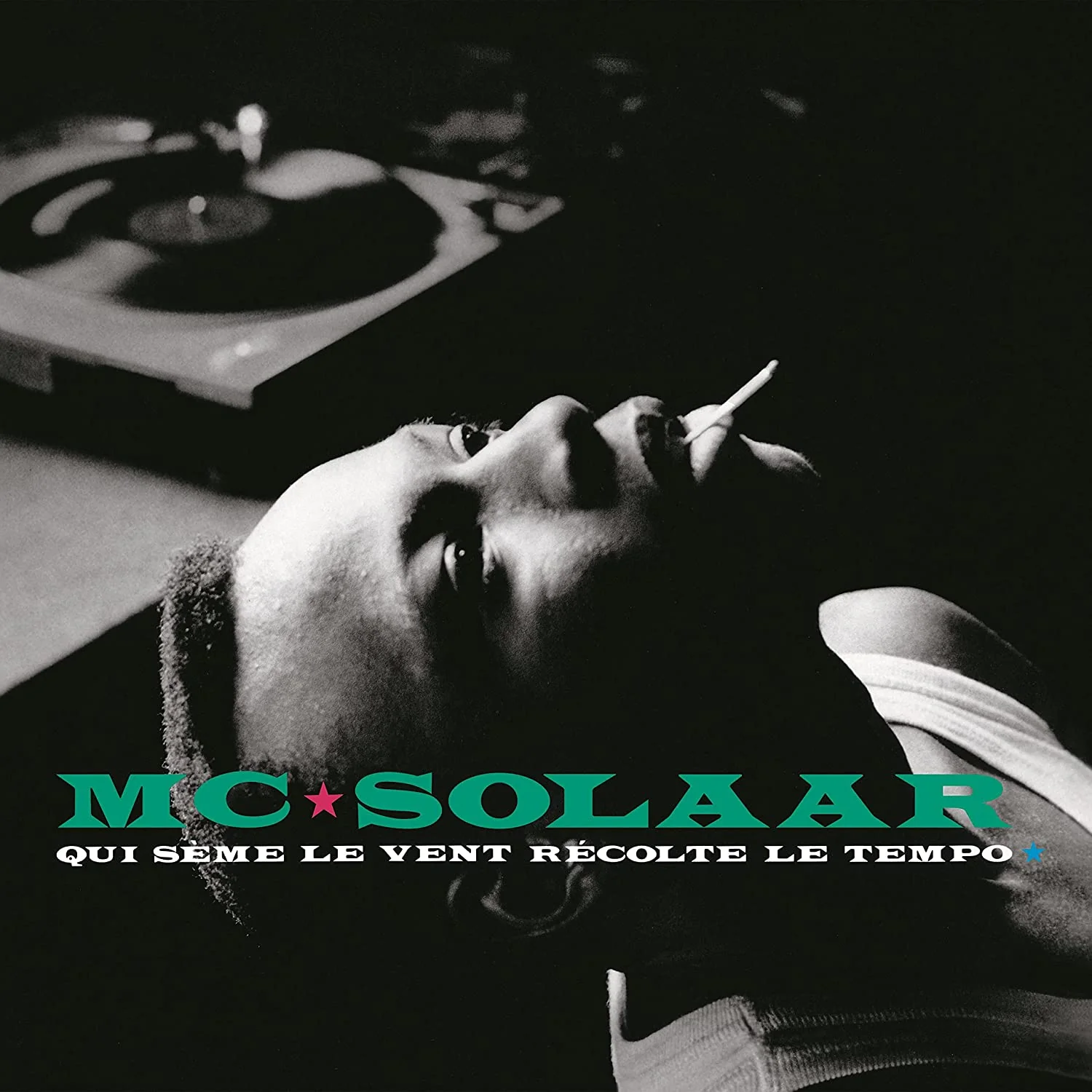
Qui Sème Le Vent Récolte Le Tempo
Product Info
The debut disc from MC Solaar is a clear signal that quality hip-hop can exist outside the U.S. and the English language barriers. Most of his lyrics read as "I'm the man" MC boasts and shout-outs to the Paris hip-hop crew, but the French rapper has superb flow and a masterful producer in Jimmy Jay, an absolute natural when it comes to creating sonic pastiches/collages to fit the lyrics. It's French hip-hop and therefore a softer, gentler sound with the music more on the acid jazz tip to match the rhythm and flavor of Solaar's native tongue. The title track immediately alerts you to the difference -- the rapid but never rushed delivery works off the rhythms of active, chopping drums anchoring a full arrangement topped by organ fills and flavored by sax near the end. Solaar is far from one-dimensional, adeptly adopting a conversational tone ("Victime de la Mode" on a fashion victim theme), changing up vocal tempos (the low-key "A Temps Partiel," a slick segue from the brief, jazzy-with-acoustic-bass "Interlude"), and leaving more open spaces in the forceful "Quartier Nord." He whispers the lost-love tale "Caroline" while Jimmy Jay enhances the melancholy mood with mournful strings and his customary attention to detail and dynamics (listen for the near-subliminal organ). The producer's like that, very smoooove but also deceptive in that there's always a lot going on in the arrangements underneath. "Armand Est Mort" gets a laid-back feel from the sax solo, and a single, mood-creating piano chord echoes "Inner City Blues" enough to make you wonder if that's a fragmentary sample of Marvin Gaye's voice popping up there in the background. But the funk front isn't neglected -- "L'Histoire de l'Art" has clavinet licks and horns over turntable scratches, "Matière Grasse Contre Matière Grise" sports an early-'70s, JB-ish funk backing with wah-wah guitar and upfront drums (and a lyrical day-in-the-life reflection on Paris and the world). And the '70s funk groove for "La Musique Adoucit les Mouers" works from a bass/drums spine with scratching and keyboard sounds while "Bouge de Là" goes off from direct drum drive and bass funk before part two injects skank organ and dubbed-out toasting. It makes for a good transition to the quasi-duel of motormouths on "Ragga Jam," probably good for lighting up audiences live, but just lightweight here, and it brings the momentum to Qui Sème le Vent Récolte le Tempo a halt. But it's an impressive debut and important historically -- by pairing a rapper and producer in perfect sync with one another, it gave early French hip-hop a sound and tone of its own from the beginning.
More Info
Limited reissue on transparent vinyl.
Tracklist
Intro 1:00
Qui Sème Le Vent Récolte Le Tempo 4:13
Matière Grasse Contre Matière Grise 3:24
Victime De La Mode 3:10
L'histoire De L'art 3:25
Armand Est Mort 3:07
Quartier Nord 3:08
Interlude 0:30
A Temps Partiel 3:47
Caroline 4:43
La Musique Adoucit Les Mœurs 5:02
Bouge De Là (Part 1) 3:10
Bouge De Là (Part 2) 3:04
Ragga Jam 5:06
La Devise 3:39
Funky Dreamer 1:13
Qui Sème Le Vent Récolte Le Tempo
Product Info
The debut disc from MC Solaar is a clear signal that quality hip-hop can exist outside the U.S. and the English language barriers. Most of his lyrics read as "I'm the man" MC boasts and shout-outs to the Paris hip-hop crew, but the French rapper has superb flow and a masterful producer in Jimmy Jay, an absolute natural when it comes to creating sonic pastiches/collages to fit the lyrics. It's French hip-hop and therefore a softer, gentler sound with the music more on the acid jazz tip to match the rhythm and flavor of Solaar's native tongue. The title track immediately alerts you to the difference -- the rapid but never rushed delivery works off the rhythms of active, chopping drums anchoring a full arrangement topped by organ fills and flavored by sax near the end. Solaar is far from one-dimensional, adeptly adopting a conversational tone ("Victime de la Mode" on a fashion victim theme), changing up vocal tempos (the low-key "A Temps Partiel," a slick segue from the brief, jazzy-with-acoustic-bass "Interlude"), and leaving more open spaces in the forceful "Quartier Nord." He whispers the lost-love tale "Caroline" while Jimmy Jay enhances the melancholy mood with mournful strings and his customary attention to detail and dynamics (listen for the near-subliminal organ). The producer's like that, very smoooove but also deceptive in that there's always a lot going on in the arrangements underneath. "Armand Est Mort" gets a laid-back feel from the sax solo, and a single, mood-creating piano chord echoes "Inner City Blues" enough to make you wonder if that's a fragmentary sample of Marvin Gaye's voice popping up there in the background. But the funk front isn't neglected -- "L'Histoire de l'Art" has clavinet licks and horns over turntable scratches, "Matière Grasse Contre Matière Grise" sports an early-'70s, JB-ish funk backing with wah-wah guitar and upfront drums (and a lyrical day-in-the-life reflection on Paris and the world). And the '70s funk groove for "La Musique Adoucit les Mouers" works from a bass/drums spine with scratching and keyboard sounds while "Bouge de Là" goes off from direct drum drive and bass funk before part two injects skank organ and dubbed-out toasting. It makes for a good transition to the quasi-duel of motormouths on "Ragga Jam," probably good for lighting up audiences live, but just lightweight here, and it brings the momentum to Qui Sème le Vent Récolte le Tempo a halt. But it's an impressive debut and important historically -- by pairing a rapper and producer in perfect sync with one another, it gave early French hip-hop a sound and tone of its own from the beginning.
More Info
Limited reissue on transparent vinyl.
Tracklist
Intro 1:00
Qui Sème Le Vent Récolte Le Tempo 4:13
Matière Grasse Contre Matière Grise 3:24
Victime De La Mode 3:10
L'histoire De L'art 3:25
Armand Est Mort 3:07
Quartier Nord 3:08
Interlude 0:30
A Temps Partiel 3:47
Caroline 4:43
La Musique Adoucit Les Mœurs 5:02
Bouge De Là (Part 1) 3:10
Bouge De Là (Part 2) 3:04
Ragga Jam 5:06
La Devise 3:39
Funky Dreamer 1:13
Product Information
Product Information
Shipping & Returns
Shipping & Returns
Description
Product Info
The debut disc from MC Solaar is a clear signal that quality hip-hop can exist outside the U.S. and the English language barriers. Most of his lyrics read as "I'm the man" MC boasts and shout-outs to the Paris hip-hop crew, but the French rapper has superb flow and a masterful producer in Jimmy Jay, an absolute natural when it comes to creating sonic pastiches/collages to fit the lyrics. It's French hip-hop and therefore a softer, gentler sound with the music more on the acid jazz tip to match the rhythm and flavor of Solaar's native tongue. The title track immediately alerts you to the difference -- the rapid but never rushed delivery works off the rhythms of active, chopping drums anchoring a full arrangement topped by organ fills and flavored by sax near the end. Solaar is far from one-dimensional, adeptly adopting a conversational tone ("Victime de la Mode" on a fashion victim theme), changing up vocal tempos (the low-key "A Temps Partiel," a slick segue from the brief, jazzy-with-acoustic-bass "Interlude"), and leaving more open spaces in the forceful "Quartier Nord." He whispers the lost-love tale "Caroline" while Jimmy Jay enhances the melancholy mood with mournful strings and his customary attention to detail and dynamics (listen for the near-subliminal organ). The producer's like that, very smoooove but also deceptive in that there's always a lot going on in the arrangements underneath. "Armand Est Mort" gets a laid-back feel from the sax solo, and a single, mood-creating piano chord echoes "Inner City Blues" enough to make you wonder if that's a fragmentary sample of Marvin Gaye's voice popping up there in the background. But the funk front isn't neglected -- "L'Histoire de l'Art" has clavinet licks and horns over turntable scratches, "Matière Grasse Contre Matière Grise" sports an early-'70s, JB-ish funk backing with wah-wah guitar and upfront drums (and a lyrical day-in-the-life reflection on Paris and the world). And the '70s funk groove for "La Musique Adoucit les Mouers" works from a bass/drums spine with scratching and keyboard sounds while "Bouge de Là" goes off from direct drum drive and bass funk before part two injects skank organ and dubbed-out toasting. It makes for a good transition to the quasi-duel of motormouths on "Ragga Jam," probably good for lighting up audiences live, but just lightweight here, and it brings the momentum to Qui Sème le Vent Récolte le Tempo a halt. But it's an impressive debut and important historically -- by pairing a rapper and producer in perfect sync with one another, it gave early French hip-hop a sound and tone of its own from the beginning.
More Info
Limited reissue on transparent vinyl.
Tracklist
Intro 1:00
Qui Sème Le Vent Récolte Le Tempo 4:13
Matière Grasse Contre Matière Grise 3:24
Victime De La Mode 3:10
L'histoire De L'art 3:25
Armand Est Mort 3:07
Quartier Nord 3:08
Interlude 0:30
A Temps Partiel 3:47
Caroline 4:43
La Musique Adoucit Les Mœurs 5:02
Bouge De Là (Part 1) 3:10
Bouge De Là (Part 2) 3:04
Ragga Jam 5:06
La Devise 3:39
Funky Dreamer 1:13